


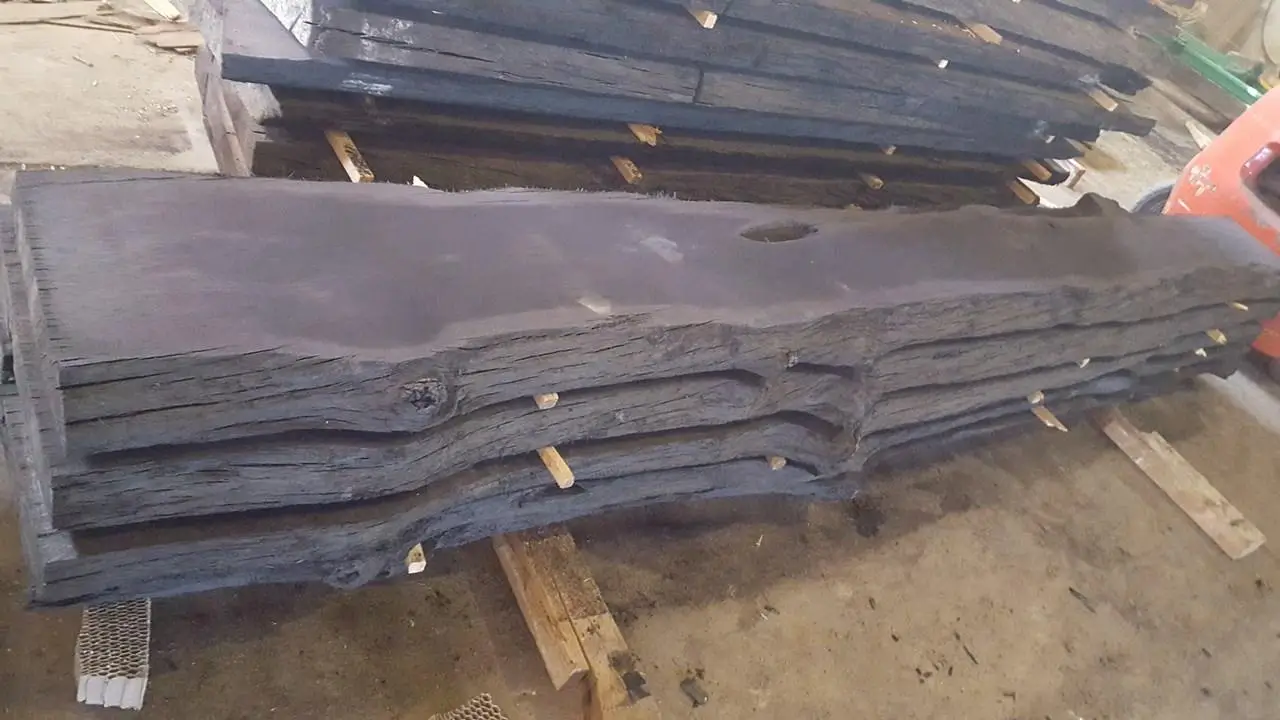
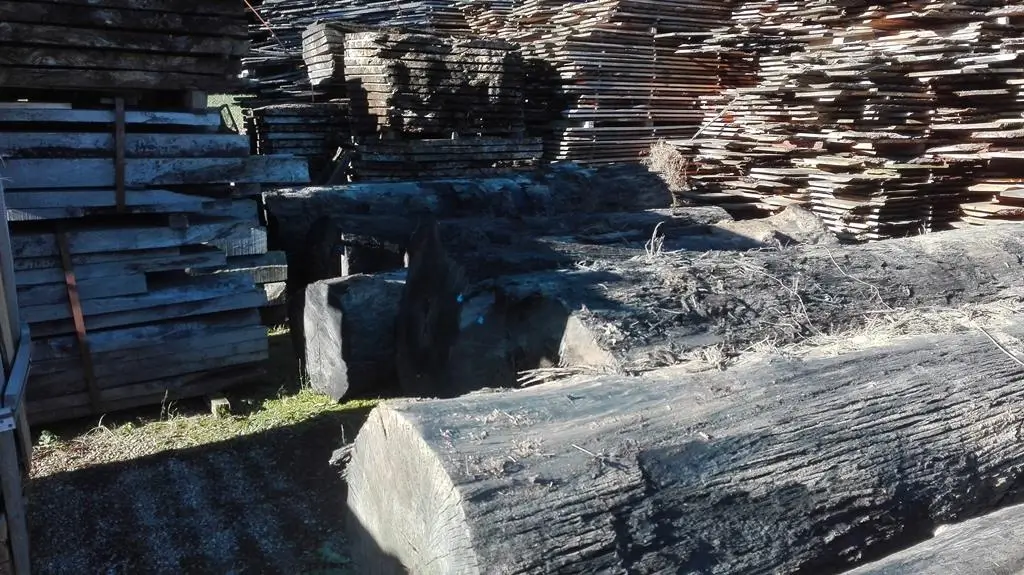
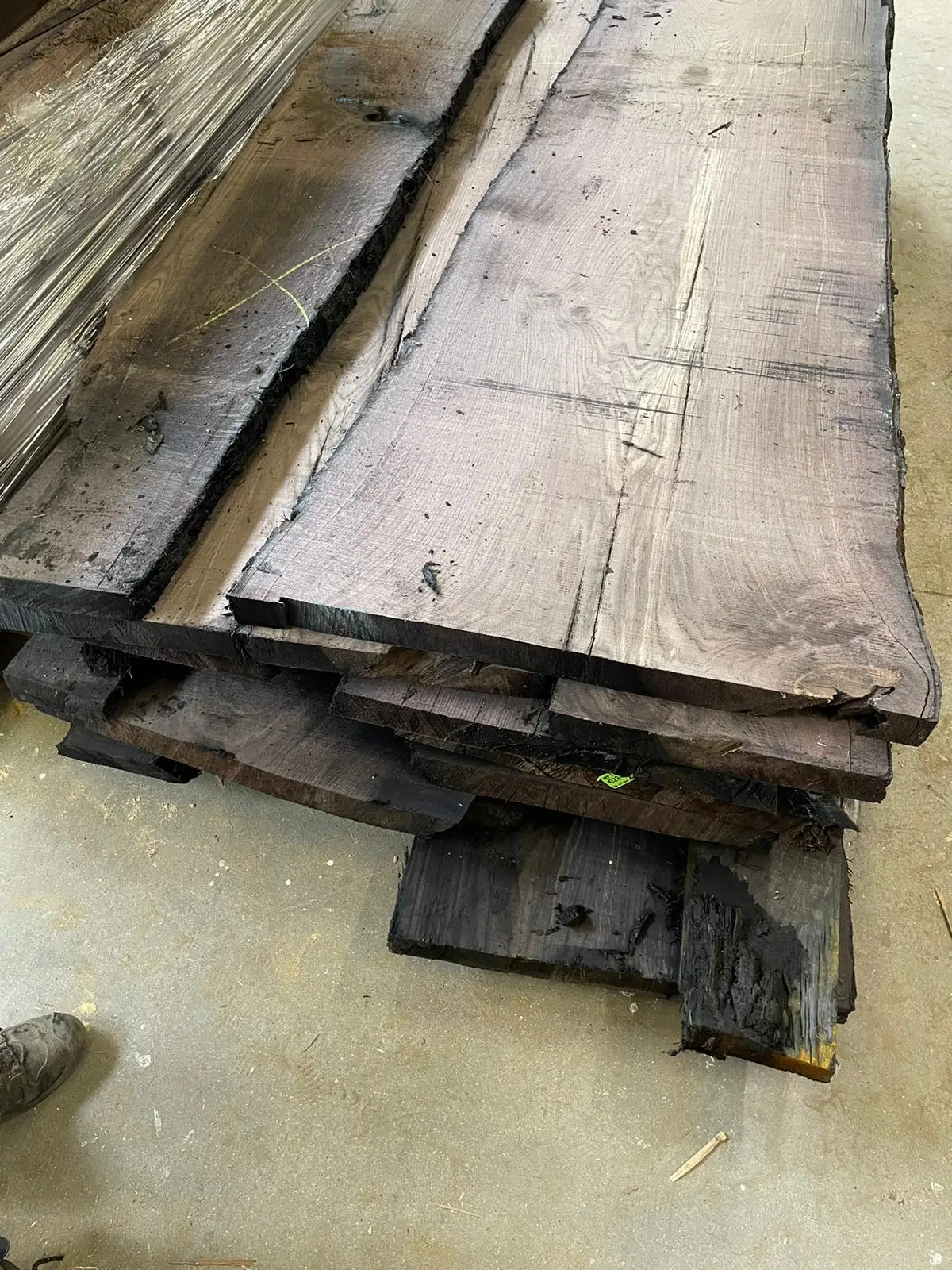
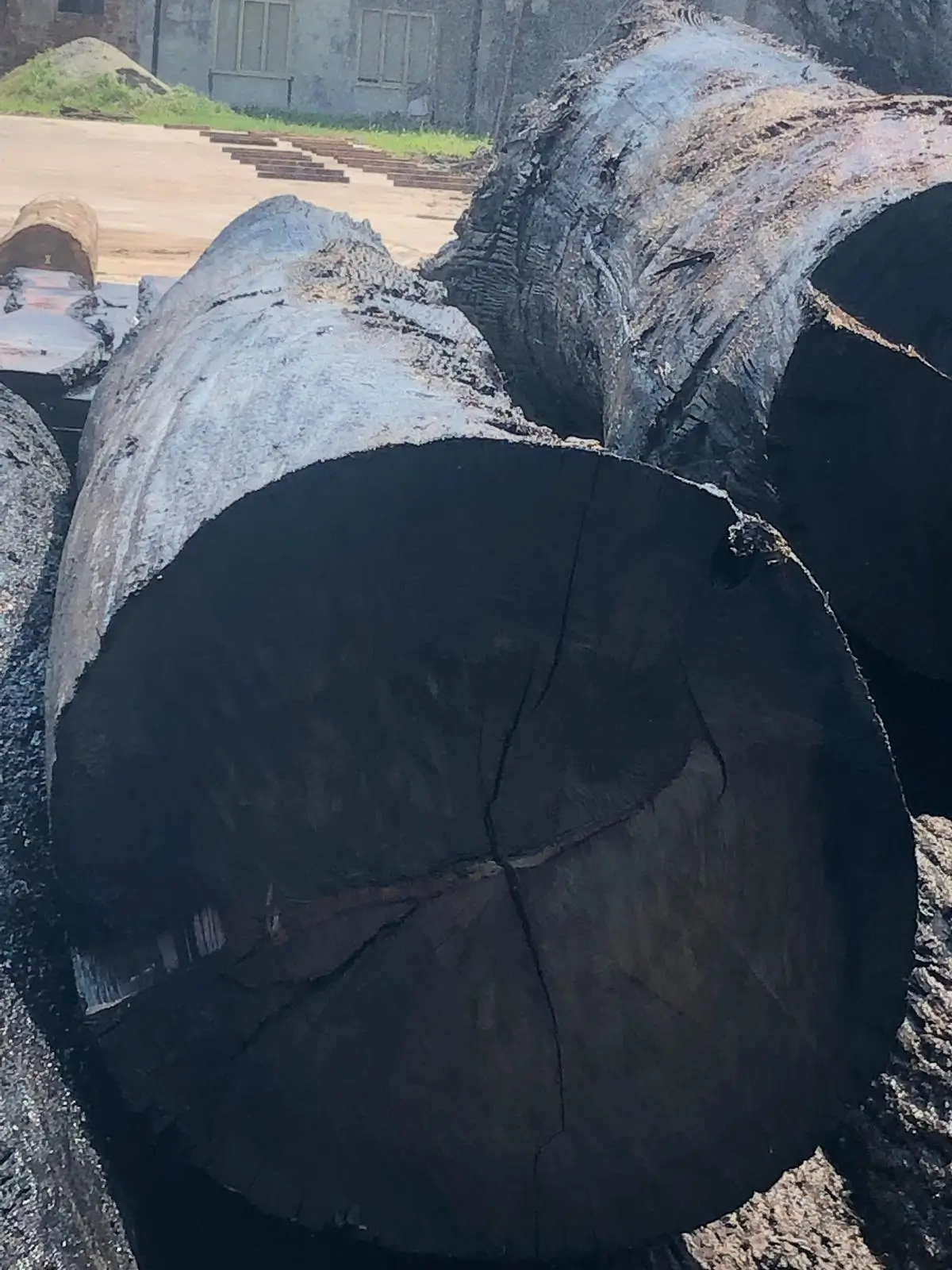
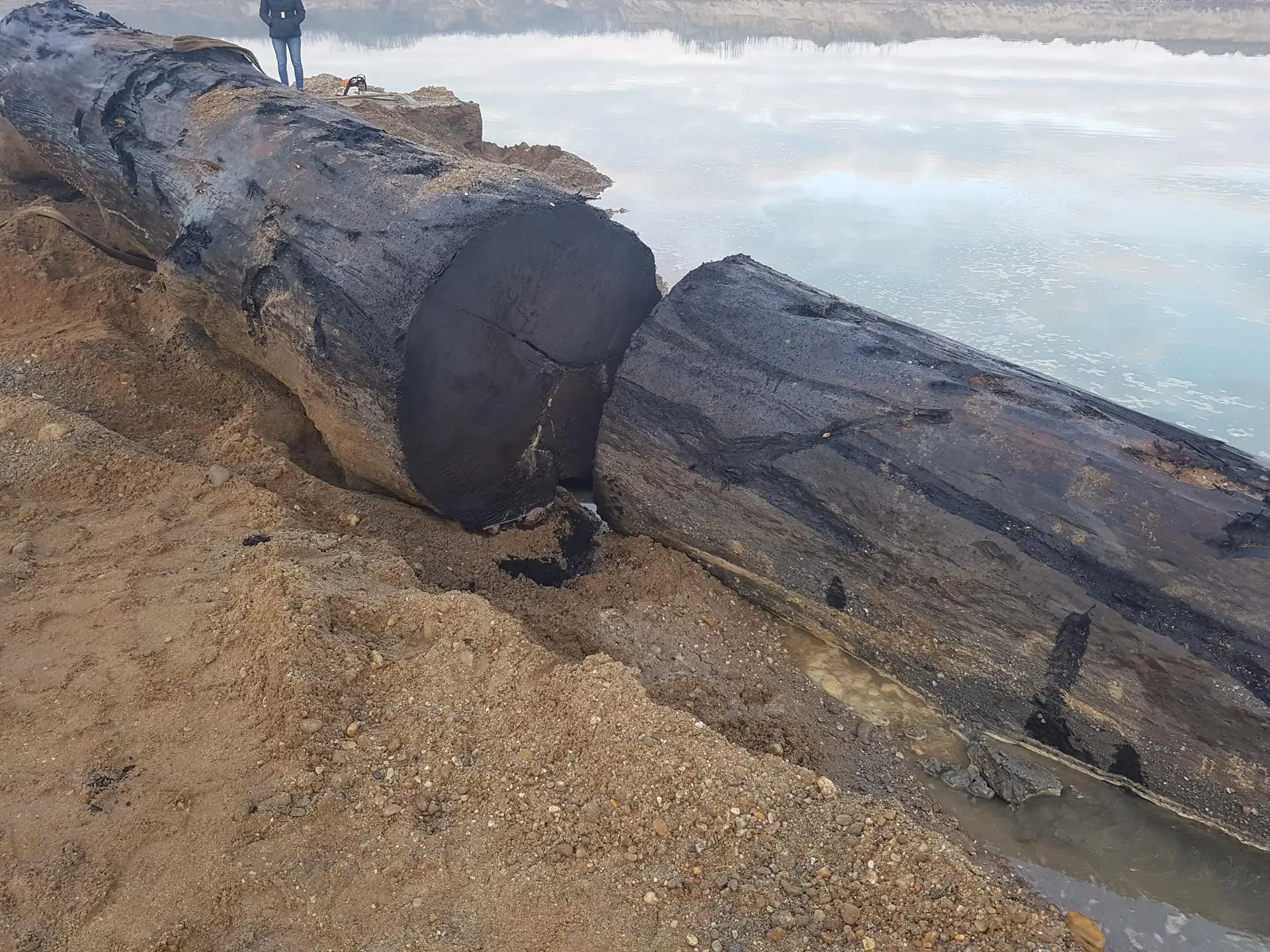
The most suitable habitats for the growth of oak forests are the mostly wet, gravelly and clay soils. In its course, the river often varies its direction by undermining the banks covered with these forests so much that nearby trees fall and are washed away into the water. When the log is trapped by its branches and roots in the riverbed, it becomes covered with layers of sediment and sand. Thus covered, and deprived of oxygen, the wood begins a slow process of fossilization that can last thousands of years, thanks to the triggering of chemical reactions that through the formation of mineral salts transform the structure of the wood, making it very similar to stone. The color becomes more pronounced, darker, and shades range from black, to brown, to green, to purple. It is therefore no longer normal wood, let alone still fossil stone, but it becomes a hard, sturdy material that can still be worked by skilled hands. Fossil Oak wood, formerly known as swamp fossil or Bog Oak has been featured in many human masterpieces such as in the construction of Venetian palaces, the throne of Peter the Great, or even the bedroom of the Sun King, Louis XIV. This wood is materially extracted from river or lake beds, in continuous contact with water and earth. It is therefore a rare, natural and inimitable product. Its extraction is not a simple process; precise precautions and specific machinery are needed, making it even more unique and rare.
The subsequent post-extraction processing is equally complex, as this wood is rich in moisture and therefore very susceptible to the thermal shocks of drying processes. Fossil wood is sourced in an environmentally friendly way, and in most cases, the wood is sourced as a result of previous excavations for construction, without further research in the area. When they do occur, traditional techniques that do not involve environmental impact are still used. Extraction is done manually, using divers who tie ropes around the log and bring it back to the surface, thus avoiding damage to both the wood material and the surrounding environment. Antica Edilizia handles millennial lumber processing for the Veneto and Lombardy regions, in major municipalities such as Venice, Verona, Padua, Vicenza, Treviso, Rovigo, Chioggia, Bassano del Grappa, San Donà di Piave, Schio, Mira, Belluno, Conegliano, Castelfranco Veneto, Villafranca di Verona, Montebelluna, Vittorio Veneto, Mogliano Veneto, Spinea, Mirano, Valdagno, Arzignano, Jesolo, Legnago, Portogruaro for the Veneto region and Milan, Brescia, Monza, Bergamo, Como, Busto Arsizio, Sesto San Giovanni, Varese, Cinisello Balsamo, Pavia, Cremona, Vigevano, Legnano, Gallarate, Rho, Mantova, Lecco, Cologno Monzese, Paderno Dugnano, Lodi, Lissone, Seregno, Rozzano, Desio, Cantù for Lombardy.
Request information
We invite you to experience the Quality
Contact us to find out more about our products and to find the perfect solution for your home or office.
Error: Contact form not found.